Beyond the Bubble and BS: AI Realities for 2026

AI is everywhere. But what is actually working inside real startups?
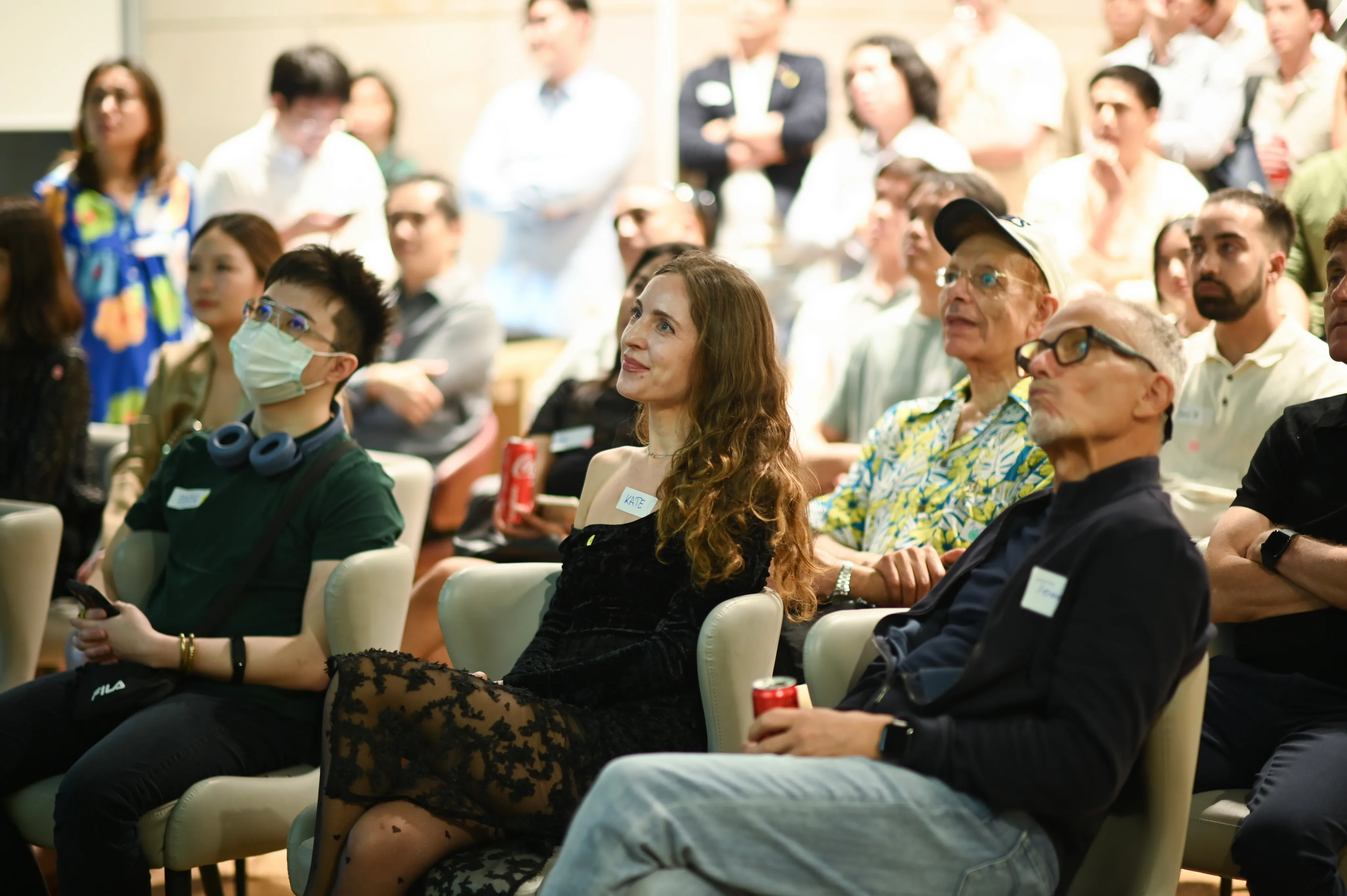
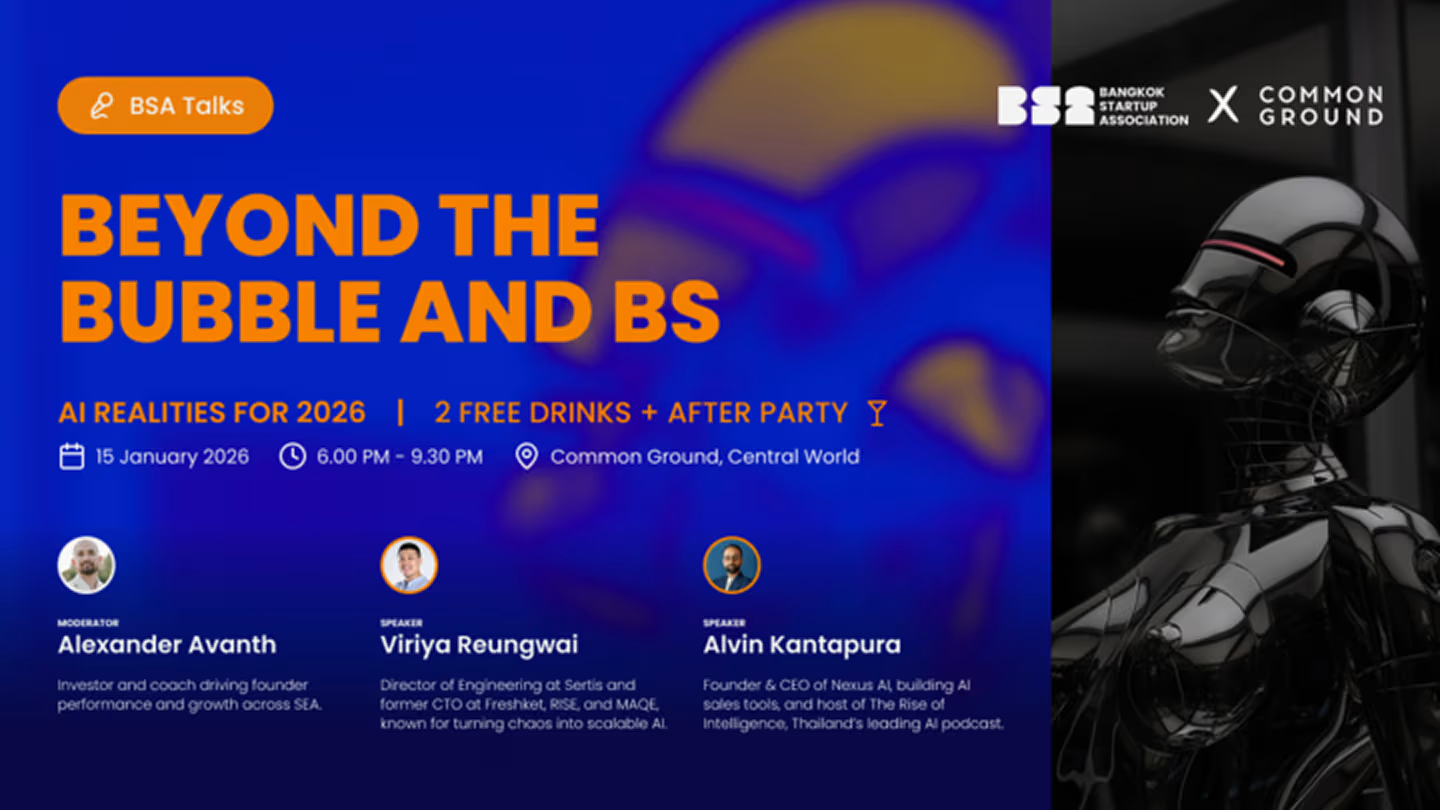
On 15 January 2026, founders, operators, and investors gathered at Common Ground Central World for BSA Talks: AI Beyond the Bubble & BS: AI Realities for 2026.
The goal was simple. Cut through the hype and discuss what founders actually learned from deploying AI in 2025, and what will matter in 2026. Instead of focusing on distant possibilities, the conversation centered on real-world implementation, tradeoffs, and outcomes.
By early 2026, the AI conversation has clearly moved beyond experimentation. The focus now is execution, integration, and business results.
Key Takeaways from the Night
For founders building with AI today, several themes stood out:
- AI companies are shifting from SaaS subscriptions to outcome-based pricing.
- AI agents are moving from assistants to operators.
- Reasoning models improve complex tasks but dramatically increase token usage.
- Smaller, fine-tuned models can outperform larger, generic models.
- The real metric for AI success is not cost—it is revenue impact and speed.
Inside the Room
The session brought together founders, engineers, and operators from across the Bangkok startup ecosystem. Rather than theoretical discussions about the future of AI, the focus stayed grounded in what companies are actually deploying today.
The panel featured builders who have spent the past year integrating AI into products, operations, and customer workflows. They shared what worked, what did not, and where the technology is heading next.
A Smarter Way to Network
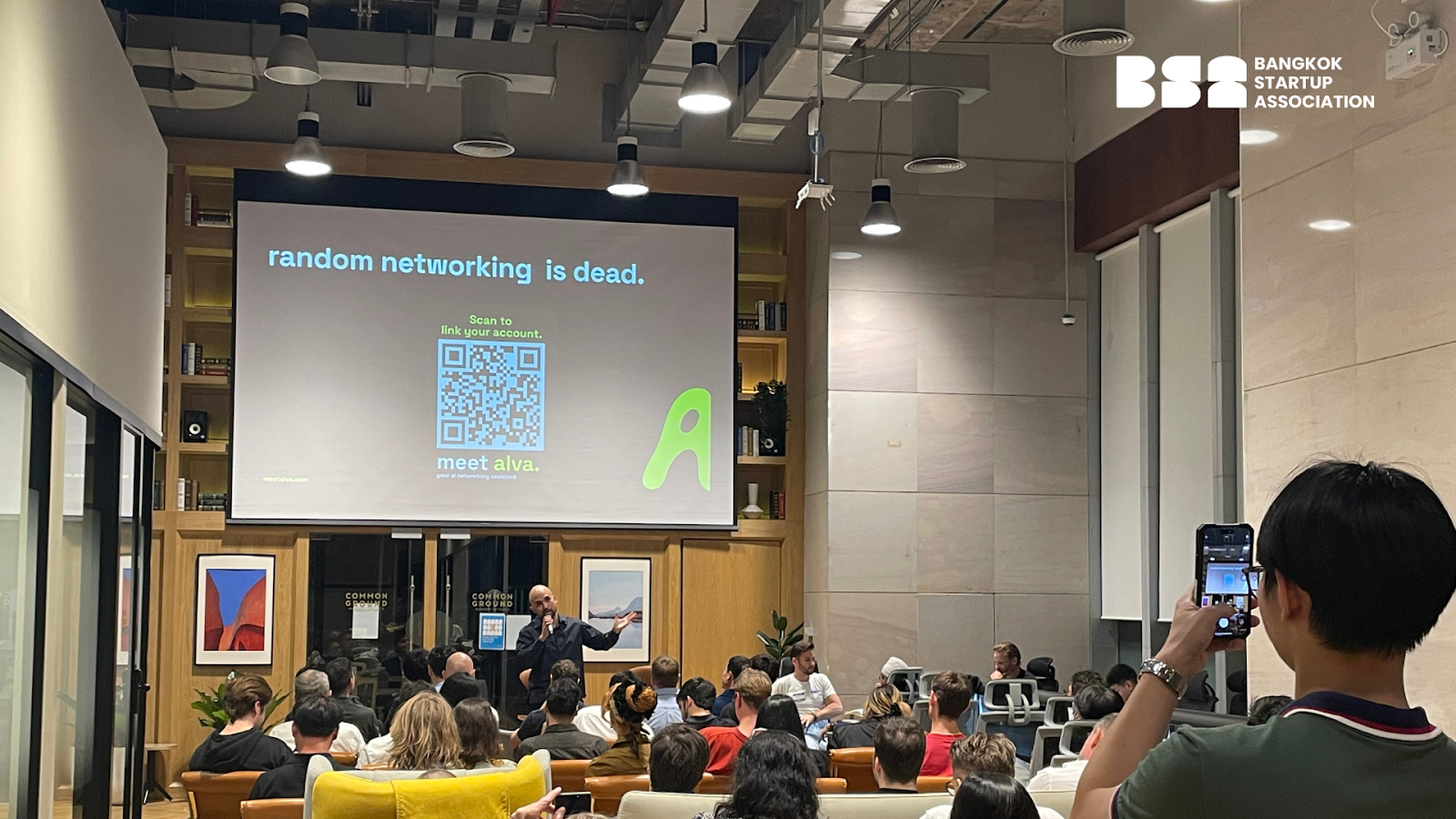
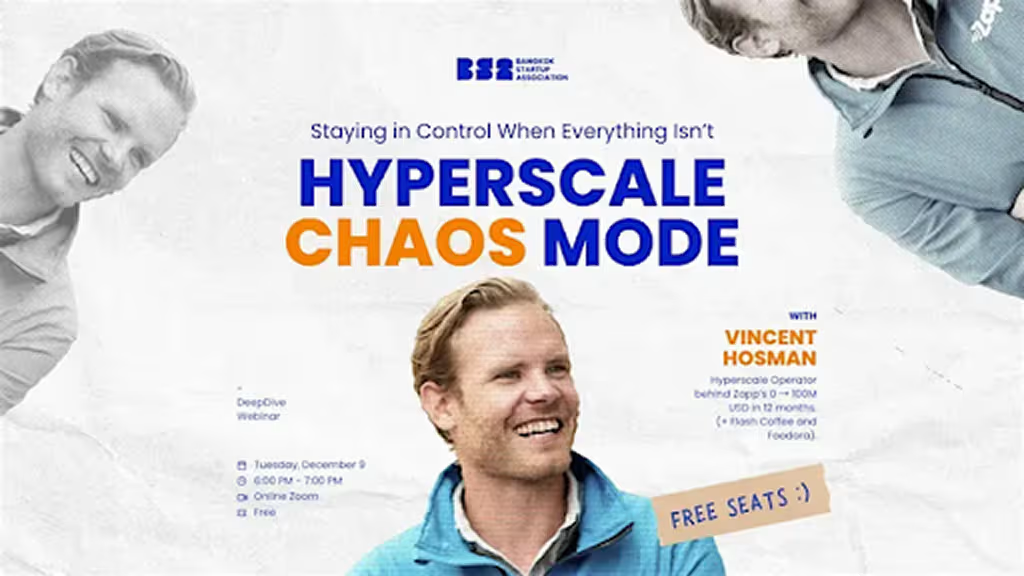
Before the panel began, attendees experienced something different. BSA community member and founder Vincent Hosman introduced Alva, an AI-powered matchmaking tool designed to improve networking at events.
Anyone who has attended a networking event knows the challenge. You walk into a room full of interesting people but have no idea who you should actually talk to. Alva helps solve this by identifying people in the room you may want to meet based on shared interests and goals.
The energy in the room shifted immediately. Small conversations began forming across the space as people approached each other with a clear reason to talk. It turned the usual networking moment into something far more intentional and focused on genuine founder-to-founder interactions.
Meet the Speakers
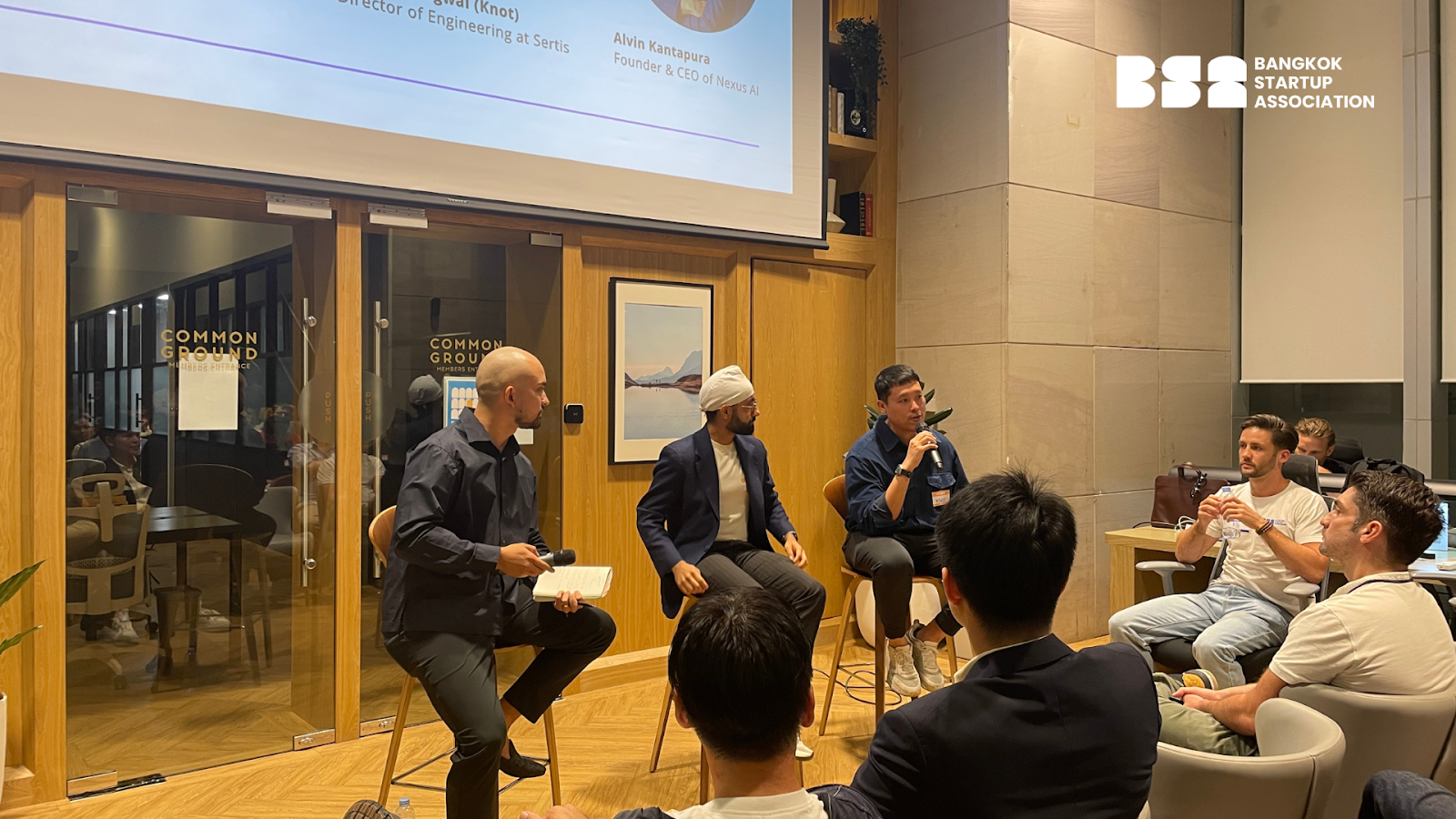
The panel brought together builders who have been deploying AI systems inside real companies, not just talking about them:
- Viriya Reungwai (Knot): Director of Engineering at Sertis and former CTO at Freshket, RISE, and MAQE. Known for turning operational complexity into scalable AI systems.
- Alvin Kantapura: Founder and CEO of Nexus AI, building AI-driven sales tools. He also hosts The Rise of Intelligence, one of Thailand’s leading AI podcasts.
- Moderator - Alexander Avanth (Alex): General Partner at MoreFutures Southeast Asia and a performance coach working closely with founders across Southeast Asia. Alex guided the discussion toward practical execution and outcomes.
The Core AI Shifts for 2026

AI Business Models Are Changing
One of the biggest shifts discussed during the session was how AI companies are rethinking their business models. Traditional SaaS subscriptions are increasingly being replaced by usage-based or outcome-based pricing.
Instead of simply paying for software access, companies are beginning to pay for results. For example, rather than paying for lead generation software, companies may pay only for qualified leads delivered. AI-native products are also starting to replace entire operational workflows, not just support them.
Insight: Companies are increasingly paying for AI outcomes, not AI tools.
The Rise of Reasoning Models
Another major development during 2025 was the rise of reasoning models. Instead of generating answers instantly, these models spend time working through a chain of reasoning before responding. This approach improves performance on complex tasks such as planning, analysis, and structured problem-solving.
However, the improvement comes with a tradeoff. Reasoning models can generate 10 to 100 times more tokens, which can create cost fluctuations of up to around 40 percent when deployed at scale. For startups building AI products, architecture and cost management are becoming strategic decisions.
Insight: Reasoning models dramatically improve complex tasks but can increase token usage by 10x to 100x.
AI Agents Are Becoming Operators
Another fast-moving trend discussed during the event was the rise of AI agents. Traditional AI tools respond to prompts. Agents go further and can complete multi-step workflows across different tools and platforms. Examples discussed included:
- Deep research agents running long analysis tasks.
- Coding agents such as Cursor, Claude Code, and GitHub Copilot.
- AI-powered browsers like Perplexity Comet and Opera Neon.
- Workflow automation tools such as n8n and Google Agent Builder.
A key technology behind this shift is the Model Context Protocol (MCP). With thousands of MCP servers already active, AI systems can connect directly to databases, APIs, and internal tools. This allows them to take real actions instead of simply generating responses.
Generative Media Is Now Production-Ready
By 2025, many generative media tools had reached a level that was "real enough to use" in production environments.
- Image and Video: AI systems can now generate high-quality visual content with minimal post-production. Some tools can even generate video and audio together in a single process.
- Voice and Audio: Voice AI has advanced significantly. Modern systems can support natural conversational flow, real-time turn-taking, and emotional awareness. In one blind listening test referenced during the discussion, 97 percent of listeners could not distinguish AI-generated music from music created by humans.
Bigger Models Are Not Always Better
Another important insight from the panel was that larger models are not always the best solution. Smaller models are improving rapidly, especially when they are fine-tuned for specific tasks.
In some cases, a fine-tuned 1B parameter model can outperform a prompted 8B model when applied to specialized workflows. For startups, this means AI systems can become faster, cheaper, and more efficient when designed with focused architectures.
Insight: A specialized 1B model can outperform a generic 8B model in certain workflows.
Where Humans Still Matter
Despite rapid advances in AI capabilities, human judgment remains essential. The panel highlighted several areas where people still play a critical role, including framing the right problems, making strategic decisions, supervising outputs, and handling edge cases.
The role of developers and founders is evolving. Instead of writing every line of code manually, many are shifting toward system design, orchestration, and AI-assisted workflows.
Insight: You are the coach. AI is the assistant.

Building AI Startups in Thailand and Southeast Asia
The conversation also explored the regional startup landscape. Thailand remains a strong place to build companies thanks to its growing tech ecosystem and operational efficiency.
However, selling locally can be challenging. Enterprise sales cycles can take six to twelve months, and many SMEs remain highly price-sensitive. Because of this, many startups adopt a hybrid strategy: building and operating in Southeast Asia while selling into larger global markets such as Singapore or the United States. The Philippines was also highlighted as one of the fastest-growing markets for AI adoption in the region.

What Founders Should Focus on in 2026
The night closed with a simple but powerful message for founders building with AI. Successful companies focus on:
- Deeply understanding customer problems.
- Solving end-to-end workflows, not isolated tasks.
- Designing systems that deliver outcomes instead of features.
- Prioritizing execution and distribution over hype.
One idea summarized the discussion well: Solve a problem in a way only you can. Then layer AI on top.
Join the Next Conversation
BSA Talks brings together founders, operators, and investors building the next generation of companies across Southeast Asia. If you are building something ambitious, you should probably be in the room.
- Explore upcoming BSA events: Eventpop
- Learn more about BSA Membership: BKK Startup
The next room might be where your next idea, collaboration, or breakthrough begins.

Because nothing great is built alone