“I Didn’t Know This Was Illegal”: Thai Startup Law Every Founder Should Understand


Business Talk Show Recap | Bangkok Startup Scene 2026
Date: 19 February 2026
Time: 6:00 PM – 11:00 PM
Venue: Foreign Correspondents' Club of Thailand
Location: Bangkok, Thailand
Startups move fast. Law… does not.
At a recent Bangkok Startup Association (BSA) event titled “I Didn’t Know This Was Illegal: Thai Startup Law for Founders,” founders gathered to unpack the legal traps that quietly derail startups in Thailand.
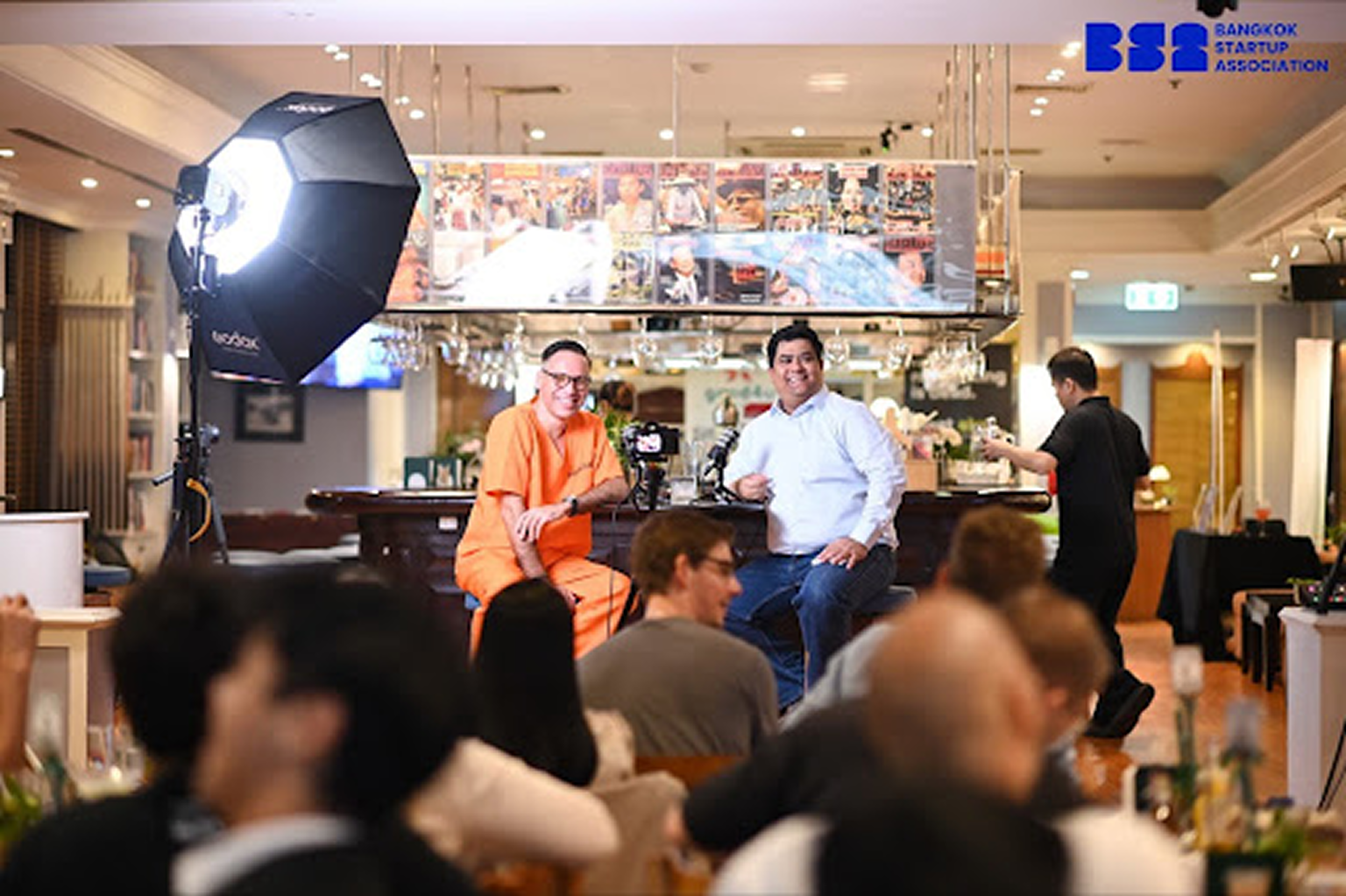
Moderated by Simon Osborne and featuring startup lawyer Parin "Tim" Kienthong—one of Thailand’s most experienced advisors to startups and venture capital—the session covered the legal mistakes founders make most often, and how to avoid them before they become expensive problems.

The Speaker
Startup lawyer. LegalTech founder. Advisor to founders, VCs, and incubators across Thailand.
Tim shared real case insights from working inside the Thai startup ecosystem, covering company setup mistakes, share disputes, and investor negotiations.

The Moderator
Founding CEO of good4u. Head of Events Production at BSA. Early-stage serial investor active in Thailand.
Simon moderated the fireside chat and brought the investor perspective, highlighting patterns he has seen during startup fundraising in Bangkok.
The conversation was casual, honest, and sometimes painfully real. Because the hard truth is: many founders only discover these legal blind spots after it’s already too late. Here is what you need to know to protect what you build.
5 Legal Traps Every Founder Must Avoid
1. The Founder Nightmare: Getting Kicked Out of Your Own Company
The evening opened with a personal story that hit close to home for many in the room.
A founder described how they started a company, put their head down to build the product, grew their customer base, and created real value—all while completely ignoring the legal structure.
Over time, their co-founders restructured the company behind the scenes. Eventually, they were pushed out of the very startup they had built.
Unfortunately, this story is not rare in the Bangkok startup scene. According to the discussion, one of the simplest ways to prevent this is something founders frequently delay or skip entirely: A Founder or Shareholder Agreement.
Even at an early stage, this document is essential. It must clarify:
- Who owns how many shares?
- Who is responsible for what roles?
- What happens if a founder leaves or stops contributing?
- Who has control over major company decisions?
These agreements don’t need to be 100-page corporate documents. For very early-stage startups, they can often be under ten pages. But they create crucial protections, including good leaver/bad leaver clauses, share buyback rights, and reserved matters that require founder consent.
Without these safeguards, you risk losing control of your own company.
2. Can AI Replace Startup Lawyers?
With AI tools everywhere, someone in the audience asked the obvious question: Why not just generate legal documents with AI?
The answer was straightforward. AI can produce documents, but it cannot understand your specific situation.
Legal agreements must accurately reflect your founders' power structure, shareholder dynamics, the company’s growth plan, and—most importantly—local Thai law.
AI-generated agreements often pull templates from other jurisdictions, particularly the United States. This leads to founders unknowingly signing agreements designed for Delaware corporate law, not Thailand.
The result? Documents that look incredibly legitimate, but are completely unenforceable locally. AI is a fantastic tool to draft outlines, but when it comes to legally binding contracts, always have them reviewed by someone with localized legal experience.
3. The Mistake Almost Nobody Fixes Early: Trademarks
During the event, the audience was asked a simple question: How many of you have registered your trademark?
Only a few hands went up.
This is one of the most common—and dangerous—oversights. Registering a trademark in Thailand is surprisingly affordable. Government filing fees start around 1,000 THB per category, and legal fees typically range between 5,000–15,000 THB.
Delaying this creates a massive opportunity for "trademark trolling." This happens when someone else registers your brand in another country before you expand there.
One example shared during the event involved a Southeast Asian company planning an expansion into China. When they tried to enter the market, they discovered someone had already registered their trademark. To use their own brand, they would have to buy it back—potentially for millions.
In another case, a company expanding to Vietnam invested heavily in marketing before discovering someone else owned their trademark locally. They chose to pay royalties, and now pay a percentage of their sales just to use their own brand.
The lesson is simple: Register your trademark early. And register it in every single market you plan to enter.
4. When Should You Actually Incorporate?
Many founders operate in a grey area, wondering when they should formally register their company. While there is no universal answer, there are a few clear signals that make incorporation necessary:
- You start generating consistent revenue.
- You need to issue formal tax invoices to clients.
- You want to raise outside investment.
- You plan to apply for government incentives.
- You want tax efficiency.
That last point is critical. Revenue received through a personal bank account may fall under personal income tax rates—which can reach up to 30%. Corporate tax, on the other hand, is typically around 20%. That difference alone easily justifies incorporation once revenue starts flowing.
Don't Miss the VAT Threshold
VAT registration is another milestone founders often miss. In Thailand, companies typically need to register for VAT when revenue reaches 1.8 million THB per year. However, many B2B businesses register earlier because corporate clients will often only work with vendors that can issue VAT tax invoices.
5. BOI vs. Normal Thai Companies & Hiring Restrictions
Should your startup apply for Board of Investment (BOI) promotion?
BOI companies receive incredible benefits, including easier hiring of foreign employees, tax incentives, and fewer restrictions on foreign ownership. But there is a catch: BOI is usually only available to technology-focused companies. Traditional businesses or standard e-commerce platforms often do not qualify.
Even for BOI-approved companies, hiring foreigners has become stricter. Businesses must often demonstrate that a Thai professional cannot fill the role before approval is granted.
The 4:1 Rule for Foreign Hires
For non-BOI companies, Thailand generally applies a strict ratio: Four Thai employees for every one foreign employee. This requirement heavily impacts the hiring strategy for international founders.
While there are workarounds—such as Employer of Record (EOR) arrangements—the legal advice was clear: Be careful. If work permits and job descriptions don’t match a person's actual daily work activities, your company runs a high risk of clashing with immigration or labour authorities.
The Bottom Line: Protect Your Foundation
The goal of this session wasn’t to turn founders into lawyers. It was to help them understand which legal risks actually matter early on. The most expensive legal problems rarely come from complicated corporate law. They come from simple things founders didn’t know they needed to do—like writing a basic founder agreement, securing a trademark, or understanding local hiring rules.
Startups are chaotic by nature. But putting a few solid legal foundations in place early on will prevent that chaos from turning into a catastrophe.
Full Conversation Available on YouTube
For founders who could not attend, the complete fireside chat and Q&A session is available online.
Watch the full recording here: I Didn’t Know This Was Illegal | Thai Startup Law for Founders | BSA Legal Talk




A Snapshot of Bangkok’s Startup Reality in 2026
This event reflects a broader shift in the Bangkok startup scene:
- Founders are building earlier and moving faster
- Investors are conducting deeper due diligence
- Legal awareness is increasing across the ecosystem
- Cross-border structuring is becoming more common
The ecosystem is no longer informal and experimental. It is structured and competitive.
Conversations like this help founders move fast without creating invisible legal risk.
What’s Next in Bangkok Startup Association’s Calendar
If you are actively involved in Thailand’s startup ecosystem, more ecosystem-focused events are coming soon.
See upcoming events here:
https://www.eventpop.me/e/136705
For those who want to stay close to ongoing conversations, founder discussions, and industry insights, you can explore more about the community here:
https://www.bkkstartup.com/sign-up


Because nothing great is built alone